


Interviews: Teaching the Machine to Listen
- Gabriela Prochazka
- Oct 10, 2024
- 7 min read

Updated: May 1
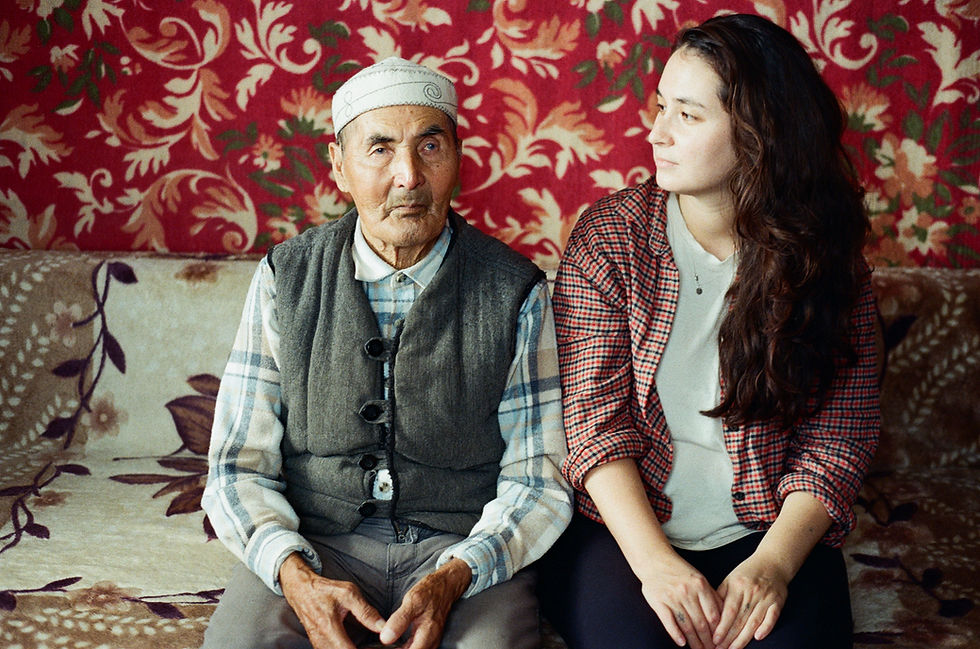
Below is the list of questions I used to interview my grandfather, my father-in-law, and my great-granduncle. They’re the foundation for how we trained the Oracle to interact with users.
Navigating these interviews meant navigating a map of the world. Each branch of the family brought a different linguistic challenge. Hugi’s father is Icelandic, but his English is great, so those conversations were easy. We could just talk. But my side of the family was a different story. My maternal grandfather speaks Russian, and while my Russian is decent, I don't use it nearly enough. During the interview, I felt "rusty." There were moments where I wanted to jump in with a sensitive follow-up question - to really chase a memory he was touching on - , but I couldn't find the words fast enough. I felt frustrated that I couldn't feel closer to him and that my level of language felt alienating when I wanted to go beyond daily conversations into emotional territory.
My great-granduncle is the oldest living link to my mother’s side. Because of his age and the dialect, my mother had to translate the questions into Kazakh. Here, I felt almost like a ghost in the room. It was nearly impossible to be a "sensitive" interviewer when I was two steps removed from the language. I had to rely on my mother’s tone and his facial expressions to know when we had touched something important.
Note: At the interviews, happened in 2025 when my son was just few months, we haven't had a chance to have full Oracle yet and played with the idea of having AI voice talking to them -- but because scheduling the interviews with older people with language barriers - I have been speaking with all of them with some level of language barrier I have decided to go against it and interviewed all of them myself, but had questions prepared and itirated from what felt like a good conversation arch.
I realized I wasn't very good at coming up with questions on the spot, and that it gave me something to lean into during moments of silence.
With all three video interviews, I have let AI analyze and transcribe them in English. I thought it was a life hack to have the option to actually use the latest technology to unlock and navigate communication in languages that I don't even speak. I have also let the AI identify the specific customs in the Icelandic/Kazakh cultures, identify every person with relations to each other, and attribute years and places mentioned.
The Interview Script: A Bridge to the Past
Below is how we structured the interviews for my grandfather, father-in-law, and great-granduncle. I wanted to build up from first childhood memories to later, more existential questions. I wasn't rigid during the interviews, and asked follow-up spontaneously on the discussed topics. But the questions below felt like a good place to come back to.
I. The Introduction (Setting the Scene)
Before we dive into the memories, we need to anchor the person in time and space for whoever is watching this in 50 years.
Who are you? Please state your full name and your role in our family.
Where are we? What is the date today, and where are we sitting right now?
The World: What is one thing happening in the world today that feels important to you?
II. The Sensory Roots (Childhood & Family)
This part is about making them dream. I want them to smell the kitchen and hear their siblings' voices. This is the "warm-up" for the heart.
The Kitchen: What was your favorite food as a child? Who cooked it, and what does that smell remind you of now?
The House: Can you describe the house you grew up in? Who lived there with you?
The Siblings: What is a favorite story about your brothers or sisters (or lack thereof)? What was the dynamic like?
The Parents: When you think of your mother or father, what is the first specific image that comes to mind? A particular trait, a look, or a habit?
The Tradition: Is there a cherished tradition or a small ritual from your childhood that you still think about?
III. The Historical Journey (Moving through Time)
Now that they are "in" the past, we move into the reality of the eras they lived through.
The Era: You lived through [specific event/decade]. How did that actually change your daily life?
The Work: What kind of work did you do, and what led you to that path?
The Move: Was there a moment of migration? Why did the family move, and what was the hardest part of starting over in a new place?
The Change: If an ancestor from 100 years ago saw your life today, what would surprise them the most?
IV. The Weight of the Journey (Happiness & Hardships)
This is the deep water. We talk about the pains and the peaks of a long life.
The Peaks: When in your life were you the happiest? What did that happiness feel like?
The Meaning: Looking back, what do you think is the real meaning of a "good life"?
The Hardships: Life isn't always kind. How did you overcome the hardest times? What strengths did you have to rely on to keep going?
The Lessons: What is an important life lesson you learned from your family’s history or your own struggles?
V. The Legacy (The Key for My Son)
This is the final "vessel." This is specifically for the future.
The Time Capsule: If you could preserve one object or one story from our family for a hundred years, what would it be?
The Advice: My son will watch this video one day when he is grown. Knowing everything you’ve been through, what is the one piece of advice you want him to have?
The Hello: Can you look into the camera, say hi to him, and tell him anything else you want him to know?
What felt good about the sequence of questions:
Sensory Priming: Asking about favorite foods and childhood homes opens up parts of the brain that help people remember details they’ve "filed away."
The "Hi" at the end: By placing the advice and the "hello" at the very end, they are already in a deeply reflective state. Their voice and expression were much softer and more authentic than if you had asked them at the beginning.
The Oracle AI Training: This structure is perfect for AI. It allows the Oracle to follow a logical, human progression - starting with simple data and moving into complex emotional responses.
Additional areas and sample questions when I needed extra ideas:
Personal Anecdote Questions:
Could you tell us about a cherished tradition one of your ancestors passed down? What is its origin, and how is it celebrated today?
Can you share a favorite story about one of your grandparents or great-grandparents that highlights their particular trait or event?
Describe a piece of advice or wisdom handed down through your family. Who originally said it, and what does it mean to you now?
Historical Context Questions:
During which historical event did your ancestors live, and how did it impact their daily lives?
Was there an ancestor who migrated from one country to another? Please share why they moved and what challenges they faced during the transition.
Can you identify any ancestors involved in significant historical or cultural events? What roles did they play?
Decision-Making Questions:
If you could ask any ancestor one question, whom would you choose and what would you ask? Why?
Imagine you're living in the same era as one of your ancestors. What kind of work do you think you would be doing, and why?
Choose an ancestor. If they were alive today, what aspect of modern life do you think would surprise them the most?
Reflection Questions:
What are some similarities and differences between your life and that of your ancestors in terms of values, career, and family life?
Could you reflect on an important life lesson that you have learned from your family's history? How has this lesson shaped your personal or professional life?
Think about the cultural heritage of your ancestors. What aspects of their culture do you continue to embrace or wish to revive?
Legacy and Future Questions:
What do you think future generations should remember about your family’s current generation?
How do you plan to pass on your family’s stories and traditions to the next generation?
If you could preserve one aspect of your family's culture or history in a time capsule, what would it be and why?
Exploring Family Dynamics:
I'd like you to reflect on a family relationship that has significantly shaped who you are today. What emotions arise when you think about this relationship?
Can you identify any recurring patterns or traits that seem to have been passed down through your family? How do you feel about carrying on these patterns?
Understanding Personal Growth:
Think about a challenging time in an ancestor’s life. What strengths did they likely rely on to navigate this period? How do you see those strengths manifesting in your own life?
As you consider the journey of your ancestors, what personal qualities do you think were most vital to their survival and success? How do these qualities play a role in your current challenges and goals?
Delving into Emotional Heritage:
Describe an emotion that was commonly felt and expressed by your ancestors. How do you relate to this emotion in your own life experiences?
Is there a particular emotional or psychological trait that you believe has been inherited from your ancestors? How has awareness of this trait influenced your personal development or mental health?
Legacy and Impact Questions:
What aspects of your ancestors' lives do you find most admirable or inspiring? How do you aspire to reflect these qualities in your own behavior or beliefs?
Consider how your family history has shaped your views on coping with stress and adversity. What lessons have been most impactful, and how do they guide your resilience today?
Fostering Future Generations:
What do you hope future generations will understand about your emotional and psychological journey? What strategies or wisdom would you like to pass down to them?
How can you actively work to heal or improve aspects of your family’s emotional legacy? What steps might you take to foster a healthier psychological environment for future generations?


Comments