


The Detective Dilemma: Why I Didn’t Hire a Professional
- Gabriela Prochazka
- Oct 10, 2024
- 2 min read

Updated: May 1
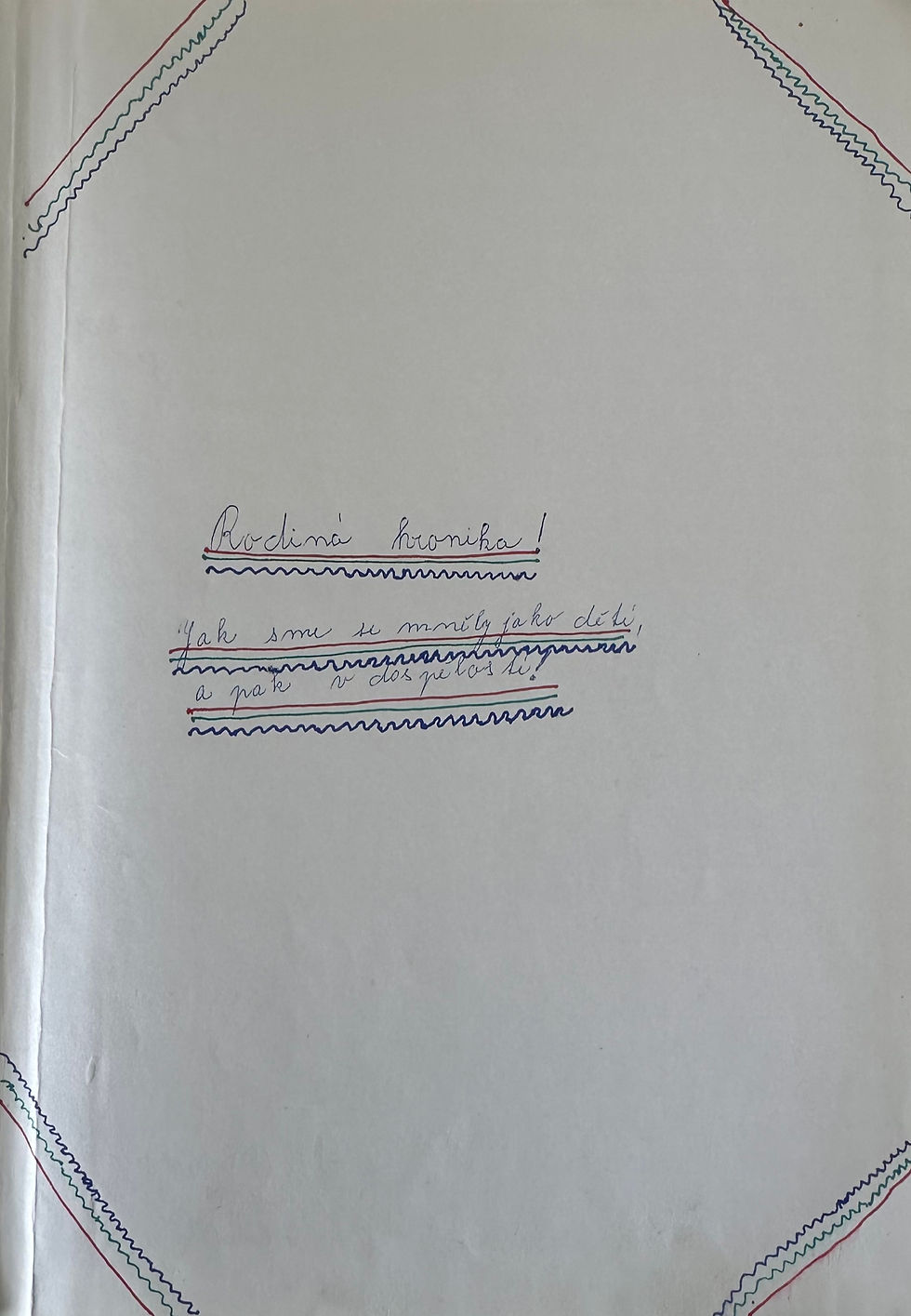
When you start digging into your roots, you eventually hit a wall. For me, that wall was built of old archives and a lot of bureaucracy. So I looked into hiring a professional family detective -someone who could bypass the headaches, dive into the Czech archives, and hand me a finished chronicle of my grandparents' lives. The process is fascinating. These professionals are like time-traveling private investigators. But as I got closer to getting one, I stopped.
My family on my father's side has roots in both Czechia and Germany, and it feels like a mystery to be uncovered one day. For example, my great-grandfather was German, but family stories differ, either he had died in prison after the Second World War or he remarried. Either way, my grandmother never saw him again since they separated towards the end of the war. (Working on ancestry is full of regret for me. If my grandmother had been still alive as I work on our genealogy, I would have hired the detective in a heartbeat, because she must have had questions all her life.)
The Price of Privacy
There were two major blockers: Sensitivity and Cost.
First, there’s the financial side. Professional genealogy is an expensive, elite service. But more importantly, it felt "sketchy" to hand over my family’s most sensitive data - names, dates, locations, and private histories - to a stranger via email.
Living in Sweden while navigating the Czech authorities is an exercise in patience. Between communicating with my uncle to find my grandparents’ documents and waiting for the authorities to respond, the process has become a "time-drag."
The Hundred-Year Rule
Part of the reason I’ve stepped back is the "Hundred-Year Rule." In the Czech Republic, archives are fiercely protective. Unless a record is significantly old - usually 70 to 100 years, depending on the type - it remains "closed" to the general public to protect the privacy of those still living.
As a direct descendant, I technically have a "key" that a random detective doesn't. With the right proof of lineage and my uncle’s help on the ground, I can eventually petition the Státní oblastní archiv myself. It’s a slow, bureaucratic process of birth certificates and formal requests, but I can see myself, as I get older, wanting to find the family details. It's like being a detective in your own family tree, exploring the kinds of political events, life opportunities, and ancestral decisions that led to your existence.
The Slow Road
So, for now, the "detective" is me. It’s slower, and it's frustrating, but it’s mine. I’d rather wait for a digitized record than hand my history over to someone.
The search for the Czech side might be on pause, but the drive to reclaim what was lost in the wars remains. I know that if I eventually change my mind and decide to pay someone to do it, it should become cheaper than the prices the gatekeepers are charging right now.


Comments