


Grandmother's diary
- Gabriela Prochazka
- Oct 9, 2024
- 2 min read

Updated: May 1
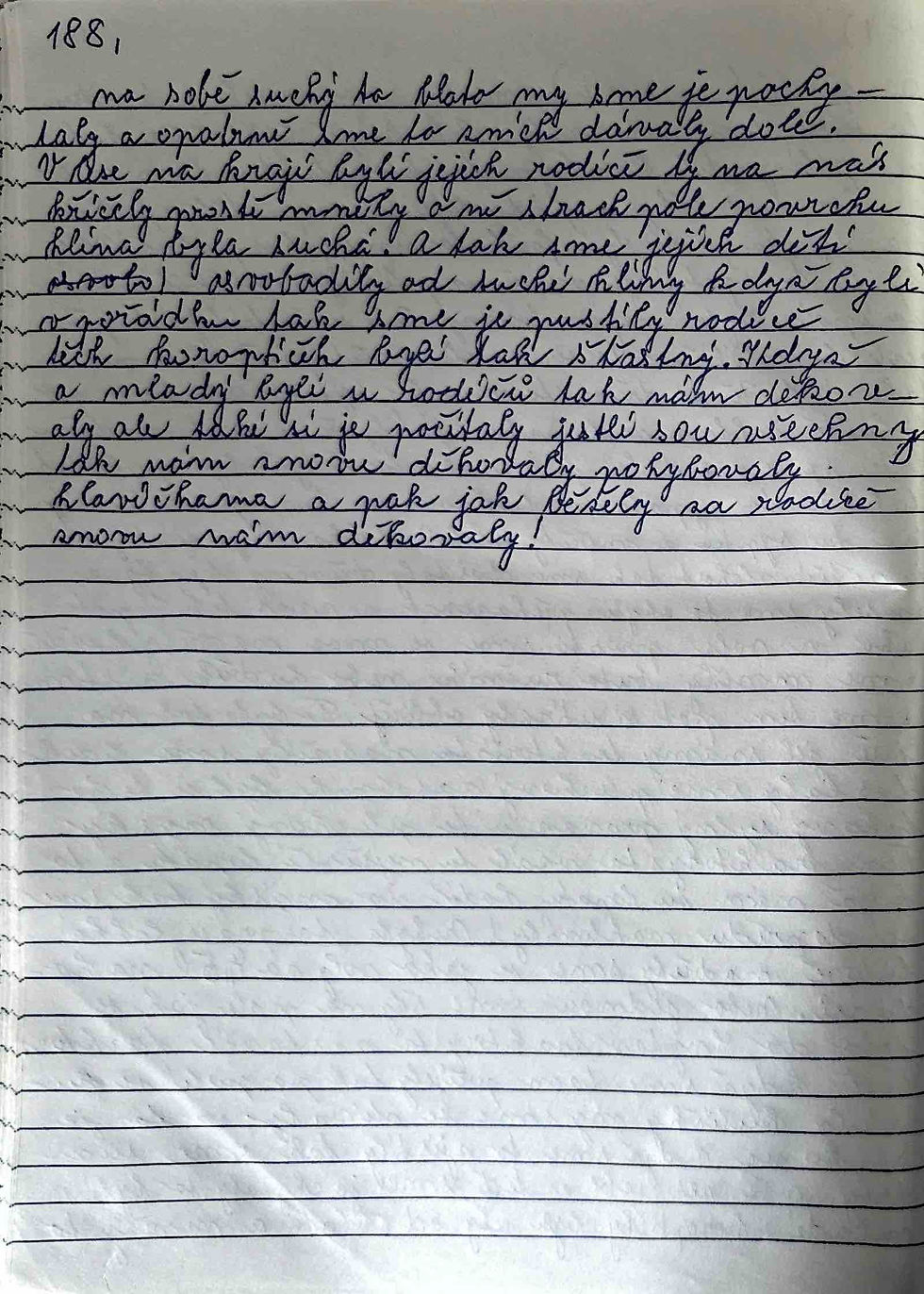
I received a diary from my grandmother after she passed away during the COVID-19 pandemic. I never had a chance to talk to her about it, and I learned so much about her life, her family, people I couldn't have met because of the different time epochs, and first-hand witnesses to the Second World War. The difficult times, human nature, and the geopolitical changes, as well as the morality of individuals and communities. All of them long gone, but they became very alive in my mind, taking up space and urging me to ask questions, to some of which I don't have answers and perhaps never will.
The most important thing for me is to keep her memories alive, and it has become a driving force to connect the past to the present and find a way to meaningfully publish them. I became fascinated with how to make family history come alive and experience it more closely, inevitably using emerging technologies as they progressed from 2023 to 2026. I have a pretty fragmented family tree on both sides, decimated by the Second World War in Europe and the Soviet Union in Asia. We delved into research on Ancestral vision from a different starting line because Hugi, as an Icelander, brings family stories dating back hundreds of years.
Methodology:
When I was thinking about the best way to preserve her diary, I started reading it out loud, transcribing it by naming the page number (as she did on every page) and letting AI rewrite it in Czech. After editing, I translated and edited a copy into English.
Selected excerpts will be published, but the full diary and edit are on our private family cloud.
For privacy reasons, I have a lot of questions about how much and what I'm willing to share, especially about the Czechoslovak post-war experience, where my family ended up in concentration camps, which is described from the perspective of my grandmother being 8 years old, and is frankly drastic. I struggle to read through it, which is why it's taking me 6 years to get through my grandmother's chronicles, and I reached out to a therapist to help me process it.
Since it offers a glimpse of the not widely discussed topic of post-war Czech-German reparations, I'm exploring sharing edited excerpts here in the future.
Maybe it's me being poetic, but the simple last entry story of my grandmother's diary as a memory of being young again and saving perdix chicklings in the field makes me think about a pretty beautiful way of memento mori (from Latin remember you must die''). Giving me her family chronicles makes her alive and so present in my mind, I can almost hear her soothing voice.


Comments